
Understanding Enterprise Software Architecture: ERP Modules Explained 2026
As global business landscapes become increasingly interconnected and fast-paced, organizations must rely on centralized technology platforms to streamline operations. Enterprise Resource Planning platforms serve as the operational brain of modern businesses, connecting fragmented business functions into a single intelligent digital framework. To fully grasp how these complex software suites operate, it is essential to examine their individual functional building blocks.
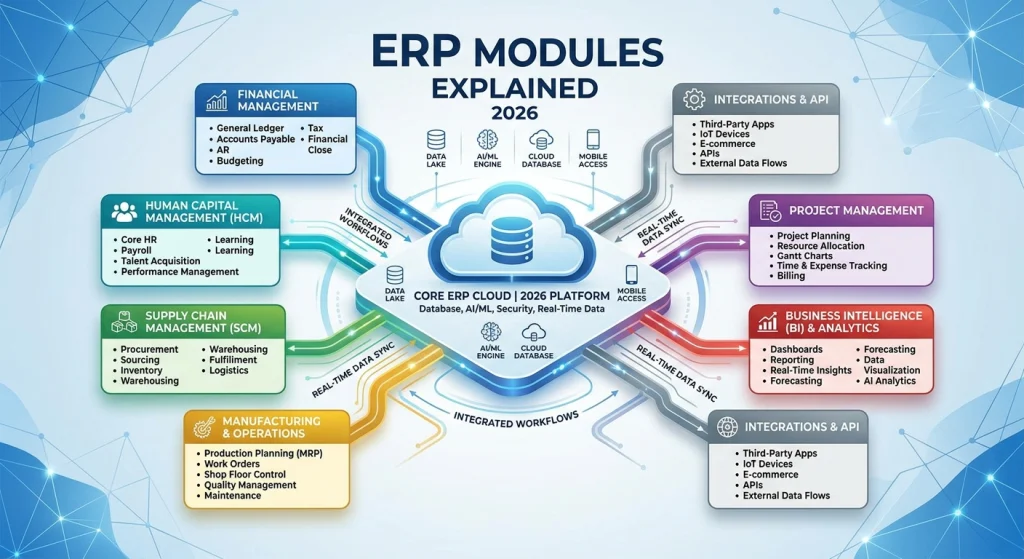
Understanding enterprise software architecture requires evaluating how individual modular applications communicate through a shared database. In this comprehensive guide, ERP modules explained 2026 highlights how modern enterprise applications no longer operate as static, isolated software tools. Instead, they function as an ecosystem of specialized modules that leverage artificial intelligence, predictive analytics, and automated workflows to deliver real-time data across every business department.
When a customer places an enterprise order through an online sales channel, the transaction instantly triggers updates across multiple modules. The customer relationship management application logs the interaction, the inventory module reserves the required products, the manufacturing application updates production schedules, and the financial accounting module logs projected revenue. This seamless real-time interoperability defines modern enterprise software efficiency.
Core Financial and Accounting ERP Modules in 2026
Financial management remains the foundational core of enterprise software architecture. Modern financial modules go far beyond basic bookkeeping, incorporating predictive capabilities and automated compliance tools.
General Ledger and Automated Financial Accounting
The general ledger module acts as the central financial repository for the entire enterprise. It consolidates transactions from all operational areas, including procurement, sales, payroll, and asset management. Modern accounting applications automate complex financial reconciliation, support multi-currency operations, and streamline global tax compliance across multiple jurisdictions.
Predictive Financial Planning and Budgeting
Traditional budgeting tools relied heavily on static spreadsheet models that quickly became obsolete. Modern financial planning modules utilize machine learning algorithms to evaluate historical financial trends, macroeconomic variables, and live sales feeds. This capability allows finance leaders to build dynamic forecast models and run complex scenario analyses in real time.
Accounts Payable and Receivable Automation
Automating cash flow workflows reduces administrative overhead and minimizes manual entry errors. Accounts payable applications utilize optical character recognition and AI pattern matching to process vendor invoices automatically. Simultaneously, accounts receivable modules streamline billing workflows, monitor credit risks, and optimize collection schedules.
Supply Chain and Inventory Management Modules
Managing global supply chains requires end-to-end operational visibility, intelligent inventory tracking, and responsive logistics management.
Advanced Inventory Management and Tracking
Modern inventory modules utilize Internet of Things sensors, RFID tracking, and predictive algorithms to monitor stock levels across global distribution networks. System algorithms automatically calculate optimal reorder points based on real-time consumption rates, preventing costly stockouts and reducing warehouse carrying costs.
Strategic Procurement and Supplier Management
Procurement modules streamline purchasing workflows by automating purchase requisitions, request for proposals, and purchase order generation. These applications also evaluate vendor performance metrics, tracking delivery reliability, pricing trends, and quality compliance to strengthen supplier relationships.
Logistics, Fulfillment, and Transportation Management
Managing product fulfillment across multi-channel distribution networks requires sophisticated routing and warehousing tools. Transportation management modules optimize delivery routes, consolidate freight shipments, and track carrier performance to minimize logistics costs and improve delivery speeds.
Human Capital Management (HCM) Modules
Workforce management has evolved from administrative record-keeping into a strategic business driver. Modern HCM modules support employee lifecycle management from recruitment through retirement.
Core HR, Payroll, and Workforce Administration
Core human resource tools maintain centralized employee records, organizational structures, and compliance documentation. Integrated payroll applications process complex compensation models, tax withholdings, and benefits deductions automatically while ensuring compliance with evolving local labor laws.
Strategic Talent Acquisition and Onboarding
Attracting top talent requires modern recruiting capabilities. Talent acquisition modules automate job postings, track applicant pipelines, analyze candidate skill sets using natural language processing, and streamline digital onboarding workflows for new hires.
Workforce Analytics and Performance Management
Retaining talent requires continuous engagement and clear development pathways. Performance management applications support continuous goal tracking, peer feedback frameworks, and automated performance reviews, while predictive analytics identify flight risks and skill gaps across departments.
Manufacturing, Production, and Quality Control Modules
For manufacturing and industrial enterprises, production planning software bridges the gap between executive strategy and shop floor operations.
Production Planning and Shop Floor Scheduling
Production management modules create detailed master production schedules based on customer demand, material availability, and equipment capacity. Real-time shop floor tracking allows plant managers to reallocate resources quickly when machine breakdowns or material shortages occur.
Bill of Materials (BOM) and Product Lifecycle Management
Managing complex product configurations requires structured documentation. BOM modules maintain multi-level component lists, assembly instructions, and engineering revision histories. Integrating product lifecycle management capabilities ensures engineering updates automatically sync with manufacturing workflows.
Automated Quality Assurance and Compliance
Maintaining consistent product quality requires automated monitoring systems. Quality control modules track inspection results, record material defects, and manage corrective and preventive action workflows to ensure compliance with strict industry quality standards.
Customer Relationship Management (CRM) and Sales Modules
Connecting front-office customer operations with back-office supply chain and accounting workflows ensures consistent customer experiences.
Sales Pipeline and Opportunity Management
Sales modules provide sales representatives with detailed visibility into pipeline opportunities, customer communication histories, and quote generation tools. Centralizing sales data improves forecasting accuracy and accelerates sales cycle velocity.
Automated Customer Service and Field Operations
Delivering post-purchase customer support requires responsive service management. Service modules route customer inquiries, manage service level agreements, and dispatch field service technicians equipped with mobile inventory tracking and diagnostic tools.
Emerging ERP Technology Trends Shaping 2026
Enterprise resource planning software continues to transform rapidly, driven by technological innovations that enhance decision-making and operational flexibility.
Artificial Intelligence and Autonomous Workflows
Artificial intelligence is deeply embedded within modern enterprise modules. Machine learning models identify operational anomalies in real time, predict equipment maintenance needs before failures occur, and automate repetitive administrative tasks through natural language interfaces.
Cloud-Native Scalability and API Ecosystems
The shift toward cloud-native software architecture allows enterprises to scale operational capabilities without investing in physical server hardware. Modern RESTful API frameworks enable effortless integration with third-party applications, external vendor systems, and specialized niche tools.
Industrial IoT Integration and Real-Time Data Streaming
Industrial Internet of Things devices stream operational metrics directly into manufacturing, inventory, and logistics modules. Real-time sensor data provides continuous visibility into machine performance, environmental conditions, and cargo locations during transport.
Key Best Practices for Selecting and Deploying ERP Modules
Selecting and configuring the right module combination requires strategic alignment, rigorous planning, and disciplined execution.
Aligning Software Selection with Core Business Capabilities
Organizations should evaluate software modules based on specific operational requirements rather than buying unnecessary feature sets. Conducting a thorough business process audit helps identify high-priority operational gaps that software automation can resolve immediately.
Prioritizing Clean Data Architecture and Governance
The performance of enterprise software depends directly on data quality. Prior to deploying new modules, organizations must establish strict data governance standards to clean, standardize, and validate master data across all operational domains.
Investing in Change Management and Continuous Training
User adoption determines long-term software return on investment. Developing role-based training programs, maintaining clear executive communication, and establishing internal champions within departments ensures employees feel confident using new workflows.
Conclusion: Driving Enterprise Growth Through Modular Excellence
Having ERP modules explained 2026 highlights that modern enterprise software is no longer a rigid, monolithic database, but a flexible, intelligent network of specialized applications. By connecting financial planning, supply chain logistics, human capital, manufacturing, and customer service into a unified cloud ecosystem, enterprises eliminate operational inefficiencies and build long-term organizational agility.
Whether modernizing legacy setups or deploying cloud-native enterprise suites for the first time, selecting and configuring the right modular framework provides a resilient foundation for sustained operational success, continuous digital innovation, and competitive market leadership.