
What Defines an Advanced ERP Product 2026?
As business environments become increasingly interconnected and fast-paced, enterprise reliance on digital management platforms has reached an all-time high. Modern organizations can no longer rely on rigid, disconnected software setups to manage daily business operations. Instead, executive leadership teams prioritize deploying a modern ERP product 2026 engineered to centralize operations, automate routine tasks, and deliver instant operational visibility across every department.
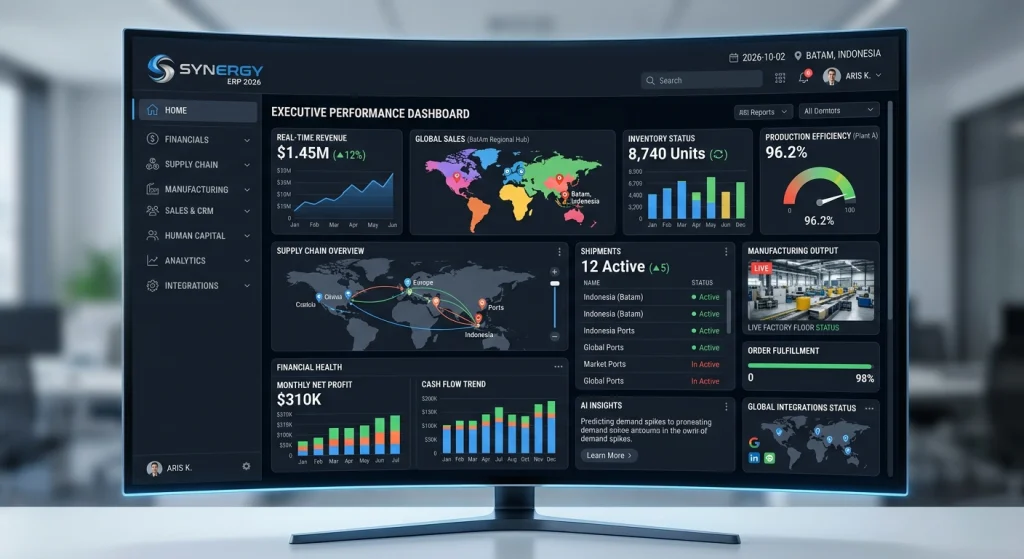
At its core, a contemporary ERP product 2026 functions as a centralized neural network for the enterprise. Rather than isolating data within separate departments—such as accounting, inventory control, procurement, or customer service—a modern platform connects these distinct operational functions into a single digital hub. When a customer places an order online, the system processes financial transactions instantly, updates live inventory records, alerts warehouse fulfillment staff, and generates supply chain reordering requests without requiring human data entry.
Unlike legacy software deployed decades ago, modern solutions emphasize modular elasticity, hyper-automation capabilities, and cloud-native integration frameworks. Organizations can adopt essential core operational modules initially and expand their system capabilities as operational scope and international presence broaden over time.
Key Technological Innovations in ERP Product 2026 Architecture
The software architecture powering enterprise planning platforms has undergone a massive technological evolution. Companies evaluating new systems must consider several transformative technological capabilities that set next-generation solutions apart from legacy infrastructure.
Artificial Intelligence and Predictive Machine Learning
An enterprise planning platform is no longer merely a system of record; it has transformed into an active driver of operational intelligence. Built-in artificial intelligence models analyze historical transaction data to forecast supply chain bottlenecks, predict demand spikes, detect fraudulent financial transactions, and automate inventory replenishment cycles with remarkable accuracy.
Hyper-Automated Workflow Engines
Manual data entry remains one of the largest sources of operational errors and productivity loss in corporate environments. Modern enterprise software utilizes intelligent document processing and natural language algorithms to process vendor invoices, reconcile bank statements, process employee expense reports, and update inventory lists automatically.
Composability and Microservices Architecture
Monolithic software packages that require extensive, custom code modifications are being rapidly replaced by composable microservices architectures. This modular design approach allows organizations to swap, update, or expand specific business application components using flexible API connections without risking full system downtime or disrupting underlying database stability.
Real-Time IoT and Edge Computing Integration
For manufacturing, logistics, and retail businesses, real-time connectivity with physical equipment is essential. Contemporary enterprise software connects directly with Internet of Things (IoT) sensors installed across warehouse facilities, transport fleets, and factory floors. This continuous data stream enables proactive machine maintenance, real-time cargo shipment tracking, and automated inventory balance adjustments.
Core Functional Modules Included in an ERP Product 2026
To deliver comprehensive operational control across enterprise environments, modern solutions combine several interconnected functional modules into a unified administrative user interface.
Financial Management and Global Accounting
The financial ledger forms the foundational core of enterprise software architecture. Modern accounting modules automate general ledger tracking, accounts payable, accounts receivable, asset depreciation, multi-currency conversions, and tax compliance across international jurisdictions. Executive leadership can generate consolidated, audit-ready financial statements in real time with a single click.
Intelligent Supply Chain and Inventory Control
Managing modern supply chains demands complete end-to-end visibility. The inventory module tracks raw material levels, work-in-progress inventory, finished goods distribution, warehouse location management, and supplier reliability metrics. Advanced forecasting algorithms help businesses maintain optimal stock balances while reducing carrying costs and avoiding stockouts.
Human Capital Management and Strategic Workforce Planning
Workforce management capabilities extend beyond traditional payroll administration. Human capital management modules streamline employee onboarding, performance management, time tracking, benefits administration, continuous skills tracking, and global regulatory compliance management. Centralized personnel records simplify scheduling and ensure equitable resource distribution.
Customer Relationship and Revenue Management
Integrating sales pipelines directly into enterprise planning software ensures seamless continuity from initial lead capture to final product delivery. The sales and customer management component records client interaction histories, contract renewals, sales commissions, customer service requests, and order fulfillment updates, giving client-facing teams complete operational context.
Advanced Manufacturing Execution and Quality Assurance
For industrial environments, production control modules manage bill of materials tracking, shop floor scheduling, equipment capacity planning, material requirements planning, and quality control inspections. Real-time shop floor integration ensures that manufacturing throughput aligns precisely with changing market demand forecasts.
Cloud Deployment vs. On-Premises: Evaluating Infrastructure Options
When selecting a modern enterprise software architecture, organizations must carefully evaluate how system hardware, databases, and software applications will be hosted, maintained, and scaled over time.
On-premises installations require companies to purchase physical server hardware, establish local database environments, and maintain dedicated internal IT teams for ongoing maintenance, hardware updates, and security patching. While this model grants organizations direct physical control over software hardware, it demands massive upfront capital expenditures and complicates remote employee system access.
Conversely, cloud-hosted platform implementations operate on a predictable operating expense model using subscription licensing hosted on secure cloud infrastructures provided by major cloud platforms. Cloud platforms eliminate local hardware maintenance demands, deliver seamless software updates automatically, and provide robust multi-tenant data security. Furthermore, cloud setups empower remote and field personnel to securely access business applications from any device or geographical location.
While certain heavily regulated state-owned enterprises or highly specialized defense manufacturers continue utilizing localized on-premises software setups, the vast majority of commercial enterprises choose cloud-native implementations due to their superior scalability, disaster recovery protection, and lower overall total cost of ownership.
Step-by-Step Selection and Implementation Strategy
Deploying a modern enterprise resource system is a strategic business initiative requiring structured project governance, detailed technical preparation, and executive-level alignment.
Step 1: Comprehensive Workflow Audit and Functional Requirements
Begin the evaluation process by analyzing existing operational processes across every department. Identify existing communication bottlenecks, redundant data entry tasks, and technical limitations. Compile a prioritized list of mandatory functional requirements and long-term business goals before reviewing potential software vendors.
Step 2: Vendor Evaluation and System Architecture Assessment
Evaluate candidate software platforms based on industry specialization, integration capabilities, vendor reputation, cloud security certifications, and user interface usability. Request tailored software demonstrations that specifically address your enterprise’s complex operational scenarios rather than generic sales demonstrations.
Step 3: Master Data Cleansing and Migration Planning
Data migration represents one of the most critical stages in enterprise software deployment. Legacy databases often contain outdated, duplicate, or improperly formatted records. Establish strict data management standards to clean, validate, and organize master data records before importing them into the new software database environment.
Step 4: System Configuration, Integration, and Extensive Testing
Configure system modules, custom business rules, operational authorization levels, and third-party API integrations (such as banking interfaces or e-commerce platforms). Execute comprehensive system testing cycles, including unit testing, integration verification, and end-to-end User Acceptance Testing (UAT) with key operational staff.
Step 5: Change Management, Staff Training, and Go-Live
System adoption success depends heavily on employee preparation. Develop role-based training programs, document standard operating procedures clearly, and designate internal power users across departments to support colleagues during transition phases. Execute cutover plans during low-volume operational periods to minimize business disruption.
Critical Pitfalls to Avoid During ERP System Implementation
While upgrading enterprise software yields immense operational benefits, failing to manage technical and organizational risks can disrupt project schedules and inflate project budgets unnecessarily.
Over-Customizing Core System Code
Attempting to modify underlying software code to replicate outdated legacy workflows is a frequent cause of implementation delays. Heavy custom code increases system complexity, elevates deployment costs, and creates obstacles when installing future cloud software updates. Organizations should prioritize adapting internal processes to standardized industry best practices whenever possible.
Underestimating Change Management Needs
Focusing exclusively on technical configuration while ignoring employee transition needs often leads to low system adoption rates and user frustration. Proactive change management strategies—including transparent executive communication, hands-on user training, and ongoing feedback channels—are essential for ensuring smooth organizational transition.
Inadequate Testing of System Integrations
Failing to verify how the new central platform communicates with external applications can lead to serious operational disruptions post-launch. Rigorous end-to-end testing across all API connections, financial portals, and customer-facing applications is critical prior to decommissioning legacy systems.
Conclusion: Driving Sustainable Growth with Next-Gen ERP Systems
Investing in a modern ERP product 2026 represents a foundational step toward building an agile, data-driven enterprise. By unifying core operations into a connected cloud ecosystem, organizations eliminate structural inefficiencies, bolster data security standards, and empower executive leadership with real-time operational insights.
Through disciplined vendor selection, rigorous data management, structured change leadership, and a focus on continuous innovation, modern enterprises can successfully deploy next-generation software platforms that drive efficiency and sustained competitive growth for years to come.