
What Is Modern ERP Migration and Why Is It Essential?
In the current global business landscape, digital transformation is no longer a luxury—it is an operational imperative. Legacy enterprise systems that once powered manufacturing, finance, supply chain, and retail operations have become major bottlenecks. To maintain operational agility, improve real-time visibility, and leverage artificial intelligence, forward-thinking organizations are prioritizing a modern ERP migration.
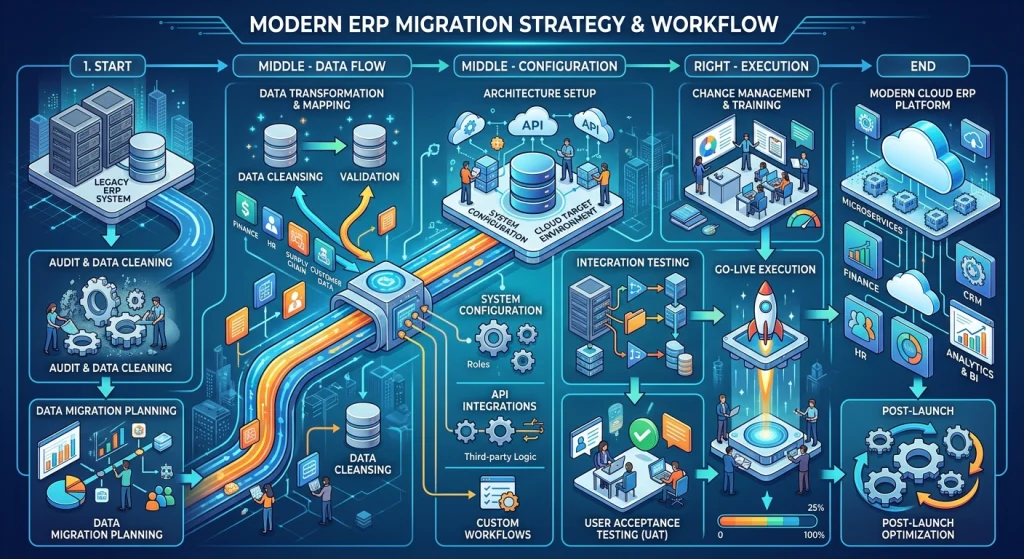
A modern ERP migration refers to the comprehensive strategic transition of an enterprise’s core resource planning software, underlying databases, and operational workflows from monolithic on-premises setups to cloud-native or modern hybrid environments. Unlike traditional IT software updates of the past, modern enterprise migration focuses heavily on workflow optimization, data standardization, process automation, and API-first ecosystem integration.
Transitioning to modern platform architectures allows companies to break down persistent functional silos. Legacy setups often isolate departmental information, forcing teams to rely on manual spreadsheets or custom middleware to exchange critical business intelligence. Executing a modern ERP migration enables real-time data synchronization across every department. When stock balances update in the warehouse, financial ledgers, customer service portals, and procurement modules reflect those changes instantly, empowering leadership teams with actionable insights.
Key Drivers Behind Modern ERP Migration Initiatives
Understanding what motivates enterprises to replace aging infrastructure highlights the clear business value of adopting cloud-native enterprise resource planning software.
Rising Total Cost of Ownership in Legacy Infrastructure
Maintaining aging, on-premises enterprise software requires continuous physical server hardware refreshes, specialized data center space, dedicated IT support teams, and custom software maintenance. Over time, these ongoing expenses consume a disproportionate share of the enterprise IT budget, restricting funds for strategic innovation. Modernizing software platforms shifts these costs toward predictable, scalable subscription models.
Severe Security Risks and Compliance Pressures
Legacy enterprise platforms frequently suffer from vendor end-of-life support notices, leaving systems vulnerable to cybersecurity threats without regular security patches. Operating mission-critical applications on unpatched infrastructure exposes enterprises to severe ransomware risks, data breaches, and non-compliance penalties under regulatory frameworks such as GDPR, HIPAA, and SOX.
Actionable Business Intelligence and Artificial Intelligence Integration
Modern enterprise platforms feature built-in artificial intelligence, machine learning, and interactive visual dashboards to process real-time operational data. Legacy platforms rely heavily on static, delayed batch reporting that forces executives to make strategic decisions using outdated weekly or monthly summaries.
Empowering Remote Workforces and Mobile Productivity
Modern business operations require flexible, remote access across multiple locations and devices. Legacy systems tied strictly to local physical networks or slow virtual private networks restrict operational productivity. Modern cloud-native platforms empower employees to securely access critical tools, complete approvals, and track operational workflows from any device or location.
Core Migration Methodologies for Modern Enterprise Platforms
Every enterprise possesses unique operational requirements, custom code dependencies, and risk tolerance levels. Choosing the appropriate implementation strategy determines how smoothly the migration process unfolds.
The Phased Rollout Method
A phased migration strategy mitigates operational risk by deploying the new platform incrementally. Phases can be structured by functional module, business unit, or geographic region. For example, an organization might migrate general ledger and accounting applications first, followed by supply chain, inventory management, and human resources over subsequent quarters.
The Big Bang Implementation Approach
The Big Bang approach involves transitioning the entire organization from legacy software to the new enterprise platform in a single, defined cutover window—typically over a weekend or holiday period. While this method minimizes the duration of dual-system operating costs, it carries higher immediate operational risks if unforeseen technical glitches occur post-launch.
Parallel System Adoption
Under the parallel migration model, the legacy environment and the new modern enterprise platform operate simultaneously for a designated trial period. Personnel process live transactions across both systems to verify data accuracy and operational stability. While highly secure, this strategy increases operational workload and temporary infrastructure costs.
Comprehensive Step-by-Step Roadmap for Modern ERP Migration
A successful transition requires disciplined project governance, executive alignment, clear cross-departmental communication, and a structured execution plan.
Step 1: Strategic Planning and Executive Alignment
Establish a dedicated migration steering committee consisting of executive sponsors, department heads, internal IT leaders, and external implementation partners. Define clear, quantifiable business objectives, project timelines, budget allocations, and key performance indicators to measure project success.
Step 2: Comprehensive Business Process Auditing
Document every operational workflow across current operations. Identify functional redundancies, inefficient manual workarounds, and legacy custom code dependencies. Use this phase to standardize and streamline business workflows rather than duplicating outdated practices in the target platform.
Step 3: Data Cleaning, Mapping, and Validation
Data transformation represents one of the most critical and labor-intensive stages of enterprise modernization. Legacy databases often contain duplicate records, corrupted fields, and outdated customer information. Establish rigorous data governance policies to clean, standardize, and map all master data prior to migration.
Step 4: System Architecture Design and API Integration
Configure target software modules, custom business rules, security authorization levels, and third-party API integrations (such as e-commerce portals, CRM platforms, and banking gateways) according to established technical specifications.
Step 5: Rigorous Testing and Quality Assurance
Conduct comprehensive multi-stage testing phases to identify technical bottlenecks and data anomalies. Execute unit testing, system integration testing, end-to-end operational simulations, and formal User Acceptance Testing (UAT) with key department leaders.
Step 6: Organizational Change Management and Employee Training
System adoption dictates long-term return on investment. Develop tailored, role-based training programs for end-users across all departments. Establish clear communication channels to manage change resistance, explain process updates, and build user confidence prior to launch.
Step 7: Go-Live Execution and Post-Launch Optimization
Execute the cutover plan during scheduled low-volume business periods. Provide dedicated technical support teams to resolve immediate post-launch issues, monitor system performance, and continually refine configuration settings based on user feedback.
Overcoming Critical Challenges in Modern ERP Migration
Navigating enterprise software modernization requires proactive risk management strategies to prevent project delays, budget overruns, and user frustration.
Managing Scope Creep and Budget Control
Enterprise transformation projects often experience scope creep when stakeholders request unbudgeted custom features or process additions during implementation. Prevent cost escalation by enforcing strict change management protocols and prioritizing core business capabilities over non-essential customizations.
Ensuring High Data Quality and Integrity
Migrating unvetted, messy legacy data into a clean cloud platform leads to functional errors, inaccurate financial reporting, and user frustration. Allocate sufficient time and specialized personnel specifically for data cleansing and verification early in the project timeline.
Overcoming Resistance to Organizational Change
Employees accustomed to legacy software interfaces often resist adopting new workflows. Address change resistance through transparent executive communication, hands-on user training, and designating internal change champions within each functional team to guide peers through the transition.
Validating Third-Party System Integrations
Failing to thoroughly test how the new platform interacts with existing third-party applications can disrupt daily supply chain or customer billing operations. Ensure end-to-end integration workflows undergo rigorous scenario testing before decommissioning legacy platforms.
Conclusion: Future-Proofing the Enterprise Beyond Modern ERP Migration
Executing a strategic modern ERP migration is a transformative initiative that positions an enterprise for sustainable innovation, operational agility, and market expansion. By retiring outdated legacy hardware and embracing scalable cloud architecture, organizations build a resilient digital foundation capable of adapting to shifting market demands.
Through strategic planning, disciplined data management, thorough testing, and robust change management, enterprises can successfully navigate the complexities of software migration—unlocking real-time operational insights and long-term operational excellence.